Bakery Oven Specs: Voltage, Power and Tray Configurations Explained
Three specifications decide whether a commercial bakery oven fits a building long before they decide whether it fits the menu: the rated voltage, the connected power, and the deck-and-tray configuration. Across BRESSO's published deck-oven and convection-oven data, those numbers sit in a narrow, predictable band — 380 V three-phase for the baking chambers, connected loads from 15 kW to 27 kW on the Asian oven platform, 3-deck bodies holding 6, 9 or 12 trays, and the EN 600 × 400 mm tray standard on the European oven range.
This guide is written for buyers and engineers at the Evaluation-to-Execution stage, when a shortlist has already been drawn and the next step is layout, electrical planning and a purchase order. It explains what each parameter actually controls, how models such as HBVO-2003, HBWO-3003 and HBVO-400ЗMAX-ZS3 differ in real layout terms, and how to convert a spec sheet into a floor plan without rework.
Why Bakery Oven Specifications Break Down at the Layout Stage
Specification errors on deck ovens rarely appear on the specification sheet itself. They appear later, at the point where the oven has to connect to a building and to a production schedule.
- Voltage assumed from the equipment class rather than the data sheet. BRESSO deck ovens and convection ovens are rated at 380 V, while the HBDC Air and HBDC Pro retarder-proofers are rated at 220 V / 2 kW. A kitchen plan that treats all baking equipment as one electrical category produces an incomplete panel schedule and delays commissioning.
- Connected power read as "per deck". The kW figure in a BRESSO specification describes the connected load of the complete unit — not of a single deck. Sizing a supply against one deck of a 3-deck oven underestimates the load by the number of decks installed.
- Tray standard mismatch. The HBWO European oven range is specified against the EN 600 × 400 mm tray standard. A project that has already purchased racks in a different format discovers the mismatch at installation, when the racks no longer fit and the layout has to be redrawn.
- Vertical clearance. Deck ovens in the HBVO, HBWO and HCV families share an overall height of 2065 mm, while the HBVO-400ЗMAX-ZS3 stands at 2250 mm. Ceiling height, hood clearance and service access above the unit have to be checked against the actual model number, not against a category average.
- Depth and aisle planning. HBVO and HBWO depths run from 1200 mm to 1495 mm, but the HBVO-400ЗMAX-ZS3 is 3100 mm deep and 1930 mm wide — a different class of floor-plan commitment.
None of these are marketing problems. They are measurement problems, and each one is resolved before the purchase order rather than during installation.
Industry Background: Why Specification Accuracy Became a Buying Criterion
Bakery equipment is now specified the way other light-industrial equipment is specified — by documented parameters rather than by brochure impression. That shift follows the market itself. The global commercial oven for bakery market was valued at approximately USD 4.6 billion in 2024, with a projected CAGR of 4.1% through 2035 (Market Research Future). The broader bakery processing equipment market, which includes ovens and proofers, reached USD 14.81 billion in 2024.
Demand is concentrated. Asia-Pacific commanded 40% of the global bakery processing equipment market in 2024, with China holding a 39% share of that regional total (Fortune Business Insights). On the product side, convection ovens are estimated to hold a 35.2% share of the global commercial oven market because of their efficiency in even heat distribution (Future Market Insights, 2025). Downstream, the global artisanal bakery market was valued at nearly USD 95 billion in 2022, which continues to drive demand for specialized steam-assisted and stone-deck ovens.
Two consequences follow for anyone specifying a bakery oven in 2026. First, because deck ovens, convection ovens and proofers are standardized into recognizable voltage, power and tray platforms, buyers compare suppliers on documented parameters — so parameter accuracy is a competitive asset, not paperwork. Second, compliance documentation is part of the specification in North America and Europe: commercial bakery equipment in the US and Canada must adhere to NSF/ANSI Sanitation Standards (for example NSF/ANSI 4) to receive the ETL Sanitation Mark (Intertek), and equipment placed on the EU market is assessed against the Machinery Directive (2006/42/EC) and the Electromagnetic Compatibility Directive (2014/30/EU).
The Four Specification Axes for Asian and European Deck Ovens
1. Rated Voltage: 380 V for Baking Chambers, 220 V for Proofers
Every BRESSO deck oven and convection oven model in the published specification data is rated at 380 V: the HBVO Asian oven range, the HBWO European oven range, the HCV convection oven range and the HBVO-400ЗMAX-ZS3. The retarder-proofers are different — HBDC Air and HBDC Pro models are rated at 220 V / 2 kW, including the HBDC-2018, HBDC-2032 and HBDC-1618 variants.
That single difference changes the electrical plan of a bakery more than any other parameter. A 3-deck oven and a 32-tray proofer are typically installed in the same production line but do not share the same supply characteristics, so the panel schedule has to be built from the model list rather than from the equipment category. Where a project requires a different supply, BRESSO's OEM/ODM customization covers various voltages worldwide, along with custom colors and sizes.
2. Connected Power: 15 kW to 27 kW on the Asian Platform
Connected power scales with tray capacity, and the two deck-oven platforms scale differently. The HBVO Asian oven range moves from 15 kW at 6 trays to 24 kW at 9 trays and 27 kW at 12 trays. The HBWO European oven range, built around the EN 600 × 400 mm tray, moves from 12.4 kW at 6 trays to 16.1 kW at 9 trays and 20.2 kW at 12 trays. The HBVO-400ЗMAX-ZS3 is rated at 380 V / 27 kW.
This is the most useful engineering comparison in the whole catalogue: at an identical 12-tray capacity, the European platform carries a 20.2 kW connected load while the Asian platform carries 27 kW. Tray count alone does not determine electrical demand — the platform, chamber design and heating configuration do. Buyers who size their supply from tray count rather than from the model number routinely over- or under-provision the panel.
Convection models occupy a separate band: HCV-5 AIR is rated 380 V / 9 kW at 5 decks and 5 trays, HCV-6S is 380 V / 10.5 kW at 6 decks and 6 trays, HCV-5+5 AIR is 380 V / 18 kW at 2 decks and 10 trays, and HCV-10S is 380 V / 21 kW at 10 decks and 10 trays. When an oven is combined with a proofer on the same line, the proofer load adds to the installation total even though it sits on a different supply.
3. Deck Count and Tray Configuration: Why 3-Decks Dominates
Three decks is the standard platform across both deck-oven families, because it gives the baker independent temperature zones without increasing the footprint beyond a normal production wall. HBVO-2003 carries 3 decks and 6 trays, HBVO-3003 carries 3 decks and 9 trays, and HBVO-4003 carries 3 decks and 12 trays. HBWO-2003, HBWO-3003 and HBWO-4003 follow the same 3-deck logic at 6, 9 and 12 trays respectively.
Deck count is a production-flexibility decision, not only a capacity decision. In a US bakery installation, a client used the top deck for high-temperature milk bread and the bottom deck for low-temperature chiffon cake within a minimal footprint; each deck had independent temperature control and exhaust valves, which allowed different products to bake simultaneously without flavor transfer. The same installation allowed the shop to start with two decks and add capacity as the business grew.
Tray staging is the second half of the configuration, handled by the retarder-proofer line. HBDC Air and HBDC Pro models are offered at 18 trays, 32 trays, and a 16-tray chilled / 18-tray frozen variant, which determines how much dough can be held in process upstream of the ovens.
4. Tray Standard, Footprint and Height
Tray format is the parameter that most often forces a layout change, because it is decided early and is difficult to reverse. The EN 600 × 400 mm tray standard is specified for the HBWO European oven range, and it cascades into racking, trolley design and bench height throughout the production area.
Footprint separates models that look equivalent on paper. HBVO-2003 measures L 1330 × D 1200 × H 2065 mm, while HBWO-2003 measures L 1120 × D 1310 × H 2065 mm. Both bake 6 trays across 3 decks, but the European model is narrower and slightly deeper — a meaningful difference on a tight production wall. At 9 trays, HBVO-3003 measures L 1730 × D 1420 × H 2065 mm and HBWO-3003 measures L 1500 × D 1310 × H 2065 mm. At 12 trays, HBVO-4003 measures L 1730 × D 1200 × H 2065 mm and HBWO-4003 measures L 1500 × D 1495 × H 2065 mm.
The HBVO-400ЗMAX-ZS3 sits outside that pattern altogether: 4 trays × 3 decks = 12 trays, with an overall dimension of L 1930 × D 3100 × H 2250 mm at 380 V / 27 kW. It delivers the same tray count as the other 12-tray models but requires roughly twice the depth and 185 mm more height, so it belongs to a different tier of site planning.
Model-by-Model Specification Comparison
The table below consolidates the published parameters for the models most often specified at the Evaluation stage. All values are as documented in BRESSO's product data.
| Model | Series | Rated voltage / power | Decks × trays | Overall dimensions L × D × H (mm) | Tray standard |
|---|---|---|---|---|---|
| HBVO-2003 | Asian oven (HBVO) | 380 V / 15 kW | 3 decks × 6 trays | 1330 × 1200 × 2065 | See note |
| HBVO-3003 | Asian oven (HBVO) | 380 V / 24 kW | 3 decks × 9 trays | 1730 × 1420 × 2065 | See note |
| HBVO-4003 | Asian oven (HBVO) | 380 V / 27 kW | 3 decks × 12 trays | 1730 × 1200 × 2065 | See note |
| HBVO-400ЗMAX-ZS3 | Champions League MAX Series Oven | 380 V / 27 kW | 4 trays × 3 decks = 12 trays | 1930 × 3100 × 2250 | See note |
| HBWO-2003 | European oven (HBWO) | 380 V / 12.4 kW | 2 trays × 3 decks = 6 trays | 1120 × 1310 × 2065 | EN 600 × 400 mm |
| HBWO-3003 | European oven (HBWO) | 380 V / 16.1 kW | 3 trays × 3 decks = 9 trays | 1500 × 1310 × 2065 | EN 600 × 400 mm |
| HBWO-4003 | European oven (HBWO) | 380 V / 20.2 kW | 4 trays × 3 decks = 12 trays | 1500 × 1495 × 2065 | EN 600 × 400 mm |
| HCV-5 AIR | Convection oven (HCV) | 380 V / 9 kW | 5 decks × 5 trays | 1900 × 1220 × 2065 | See note |
| HCV-6S | Convection oven (HCV) | 380 V / 10.5 kW | 6 decks × 6 trays | 900 × 1340 × 2065 | See note |
| HCV-10S | Convection oven (HCV) | 380 V / 21 kW | 10 decks × 10 trays | 900 × 1220 × 2065 | See note |
Note on tray format: the EN 600 × 400 mm tray standard is specified in the HBWO European oven data. The remaining series publish capacity in trays rather than in tray dimensions, so tray format should be confirmed with BRESSO during specification rather than assumed from capacity.
Reading the table correctly: compare models by connected power (kW) and footprint (L × D × H) together, not by tray count alone. HBVO-4003 and HBWO-4003 both hold 12 trays, but the connected loads differ by 6.8 kW and the depth differs by 295 mm.
Step-by-Step: Specifying a Bakery Oven for Your Layout
- Fix the tray standard first. If the project runs on the EN 600 × 400 mm format, the HBWO European oven range is the natural platform and racking, trolleys and benches can be planned around one tray size. Tray format is the least reversible decision in the whole process.
- Convert peak tray demand into deck count. If peak bake-off requires 6 trays at a time, a 3-deck 6-tray body (HBVO-2003 or HBWO-2003) is the right size; at 9 trays, move to HBVO-3003 or HBWO-3003; at 12 trays, the choice is between HBVO-4003, HBWO-4003 and HBVO-400ЗMAX-ZS3.
- Match the supply to the model list, not to the equipment category. Deck ovens and convection ovens are rated 380 V; HBDC Air and HBDC Pro retarder-proofers are rated 220 V / 2 kW. Build the panel schedule from the model numbers actually ordered.
- Total the connected load before sizing the supply. The kW figure is the unit load. Add every oven and proofer on the same production line to arrive at the installation total, and check it against the available capacity at the site.
- Map the footprint and the vertical envelope. Use published dimensions for width, depth and height — 2065 mm for HBVO, HBWO and HCV models; 2250 mm for the HBVO-400ЗMAX-ZS3 — and confirm ceiling height, hood clearance and service access against the actual model, not against the series.
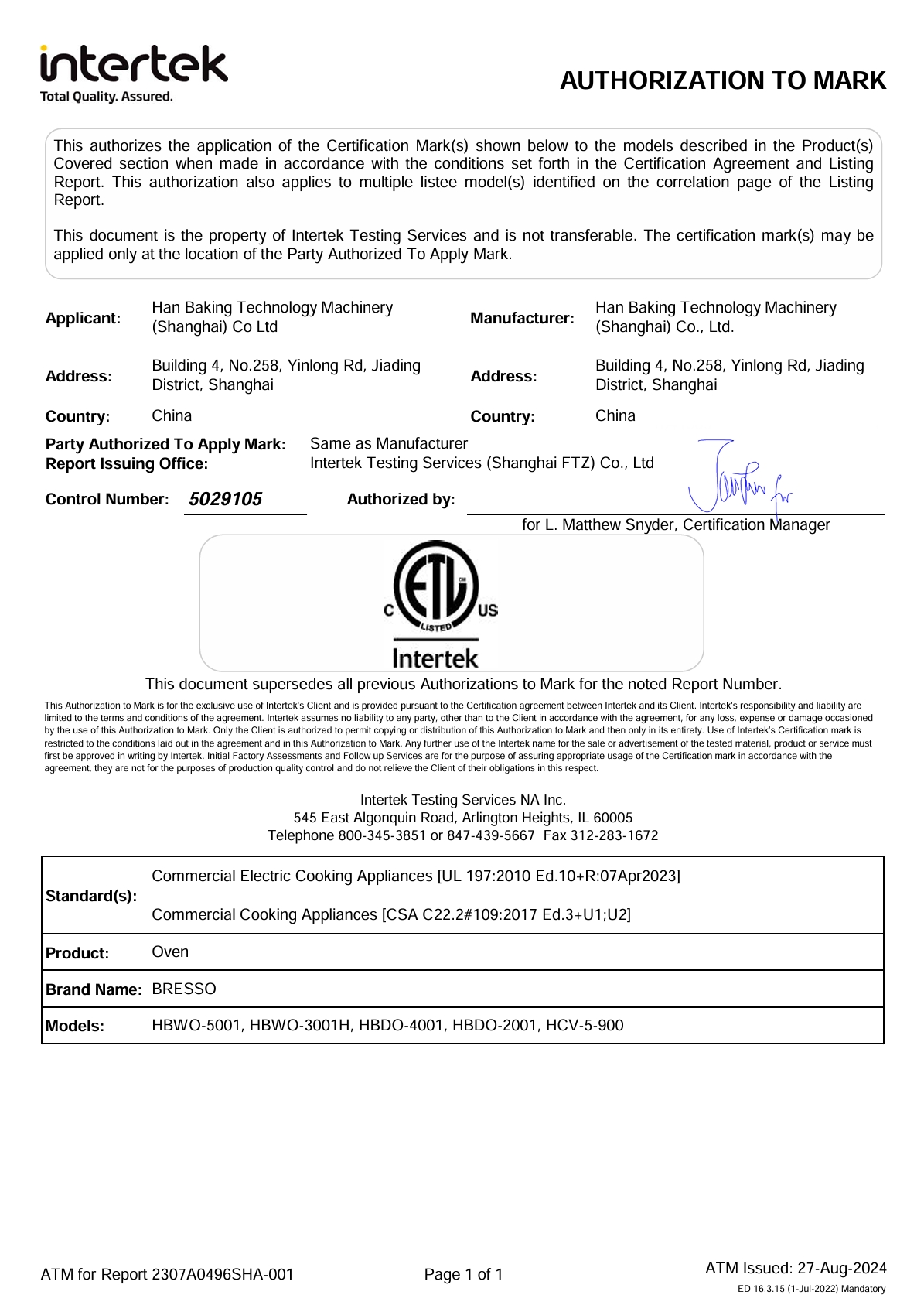
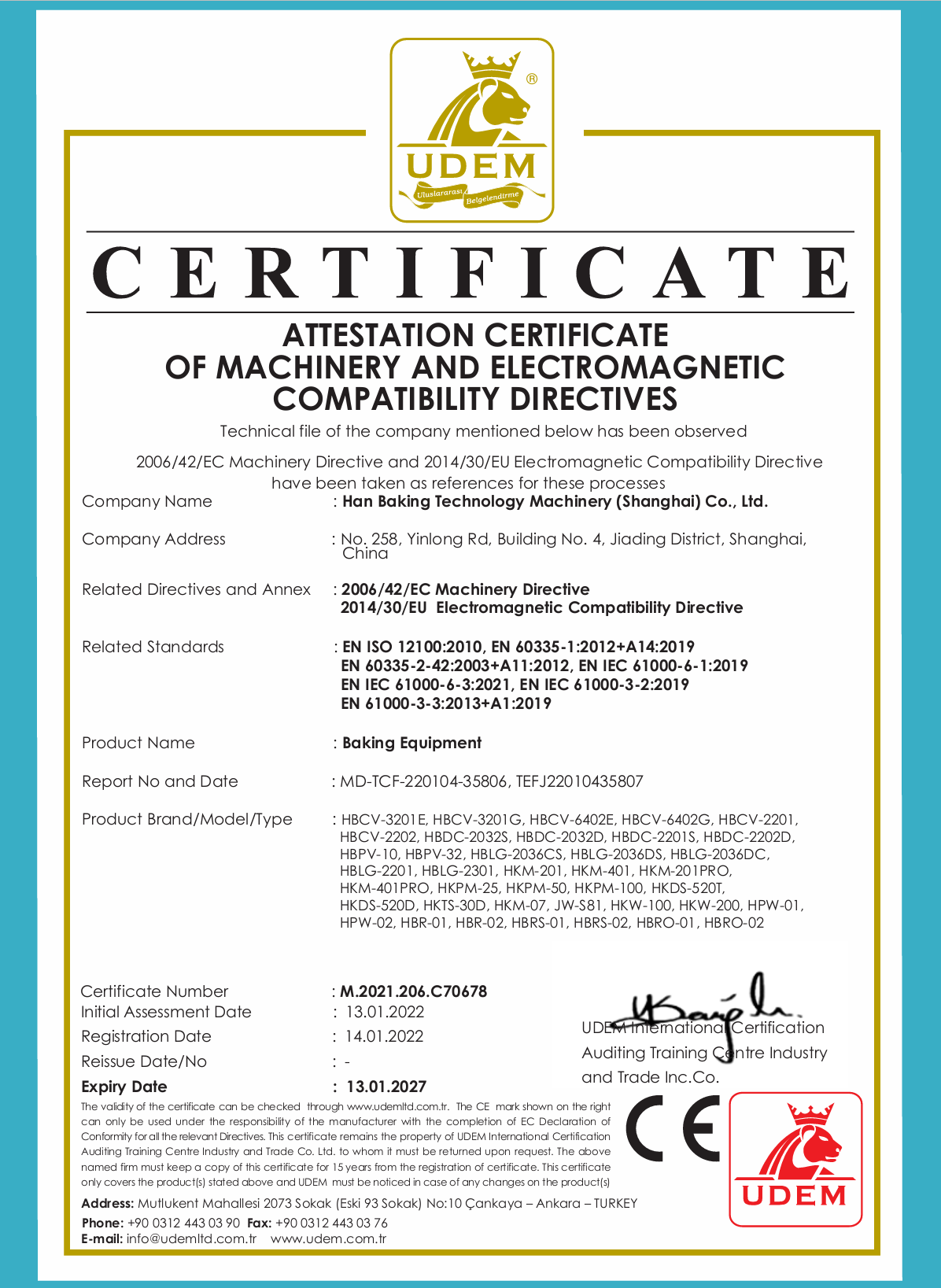
- Confirm compliance documents for the destination market. For the US and Canada, check the Intertek cETLus / ETL Sanitation listing (certificate no. 5029105, issued 2024-08-27, citing UL 197:2010, CSA C22.2#109:2017 and NSF/ANSI STD.4). For the EU, check the CE attestation (certificate no. M.2021.206.C70678, issued 2022-01-14 and valid to 2027-01-13, covering Machinery Directive 2006/42/EC and EMC Directive 2014/30/EU).
- Lock commercial parameters. Confirm minimum order quantity, lead time, delivery terms, acceptance testing and payment terms before the specification is frozen, so the layout plan and the purchase order move on the same schedule.
How These Specifications Play Out in Real Installations
Multi-Deck Flexibility in a Space-Constrained US Bakery
A US bakery client installed 8 units of the European oven platform over 8 years in a high-rent downtown location with limited space and a very diverse product range, including Japanese milk bread, soft buns and travel cakes. The configuration allowed high-temperature milk bread on the top deck and low-temperature chiffon cake on the bottom deck at the same time. The modular design let the owner start with two decks and add capacity as the business grew, and each deck's independent temperature control and exhaust valves prevented flavor transfer between products. This is the practical argument for 3-deck specification: not raw capacity, but simultaneous production of different products within one footprint.
Volume Production with Minimal Operator Input in Malaysia
A Malaysian factory installation of 50 units, in service for 5 years, bakes milk bread, soft buns, sweet rolls and everyday pastries for neighborhood bakeries and private studios. The reported result is highly precise top and bottom heat giving perfectly even color across a tray of milk bread, which removed the need for frequent tray rotation. The equipment was also noted for fast heating, good insulation and a control panel that novice apprentices can learn quickly, lowering training costs. In tray-configuration terms, this is what a well-matched deck and tray count buys: repeatable output using less skilled labor per tray.
Uniformity and Temperature Control in Malaysian Patisseries
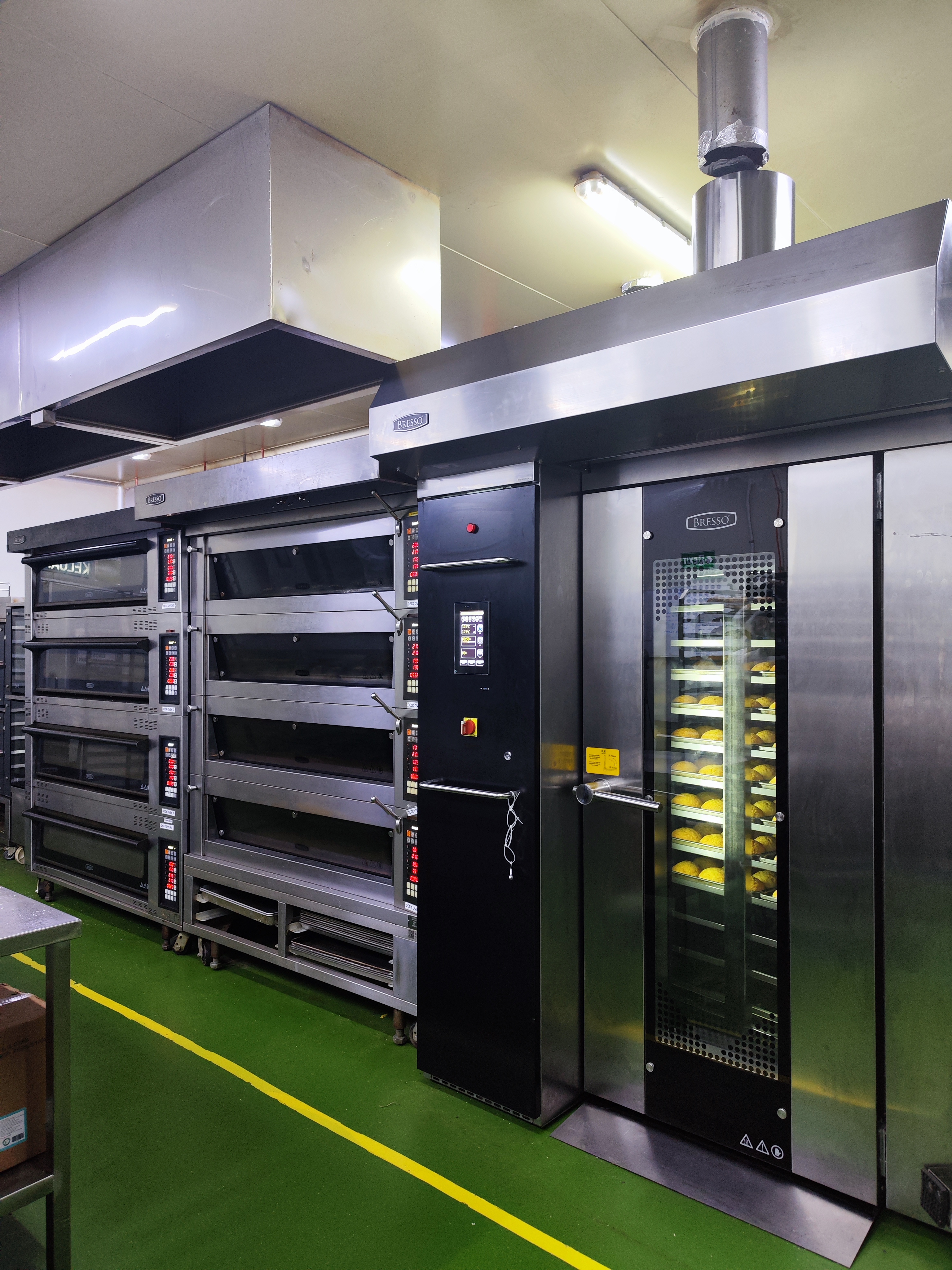
Six units were installed across boutique French patisseries for a bakery chain client and have been operating for 5 years. The key engineering points were gentle convection airflow that preserves delicate pastry layers and a double-glazed insulated door holding temperature within ±1 °C. The installation solved a labor problem as much as a quality problem: bakers previously had to rotate trays mid-bake by hand, and the reported outcome was uniform golden color, distinct flaky layers and a crispy texture on croissants.
Sustained Operation in Australia and Canada
An Australian end user installed 5 units of the European Oven model HBWO and reported a 30% increase in production efficiency, with the equipment in continuous operation for 15 years. The specification points behind that result were a powerful independent steam system, exceptionally uniform heat distribution from the stone deck, and heat retention strong enough to keep baking continuously without temperature drops — the parameters that matter most for artisan breads.
A Canadian shop owner installed 8 units of the same platform and reported 15 years of continuous operation, including zero-failure operation during peak hours and a 20% reduction in energy consumption compared with older equipment. Precise temperature control with independent top and bottom heat adjustment was cited as the reason the shop could handle delicate Asian pastries such as soft buns, Japanese milk bread, egg tarts and sponge cakes in a compact footprint.
Climate-Driven Specification: Humidity and Cold
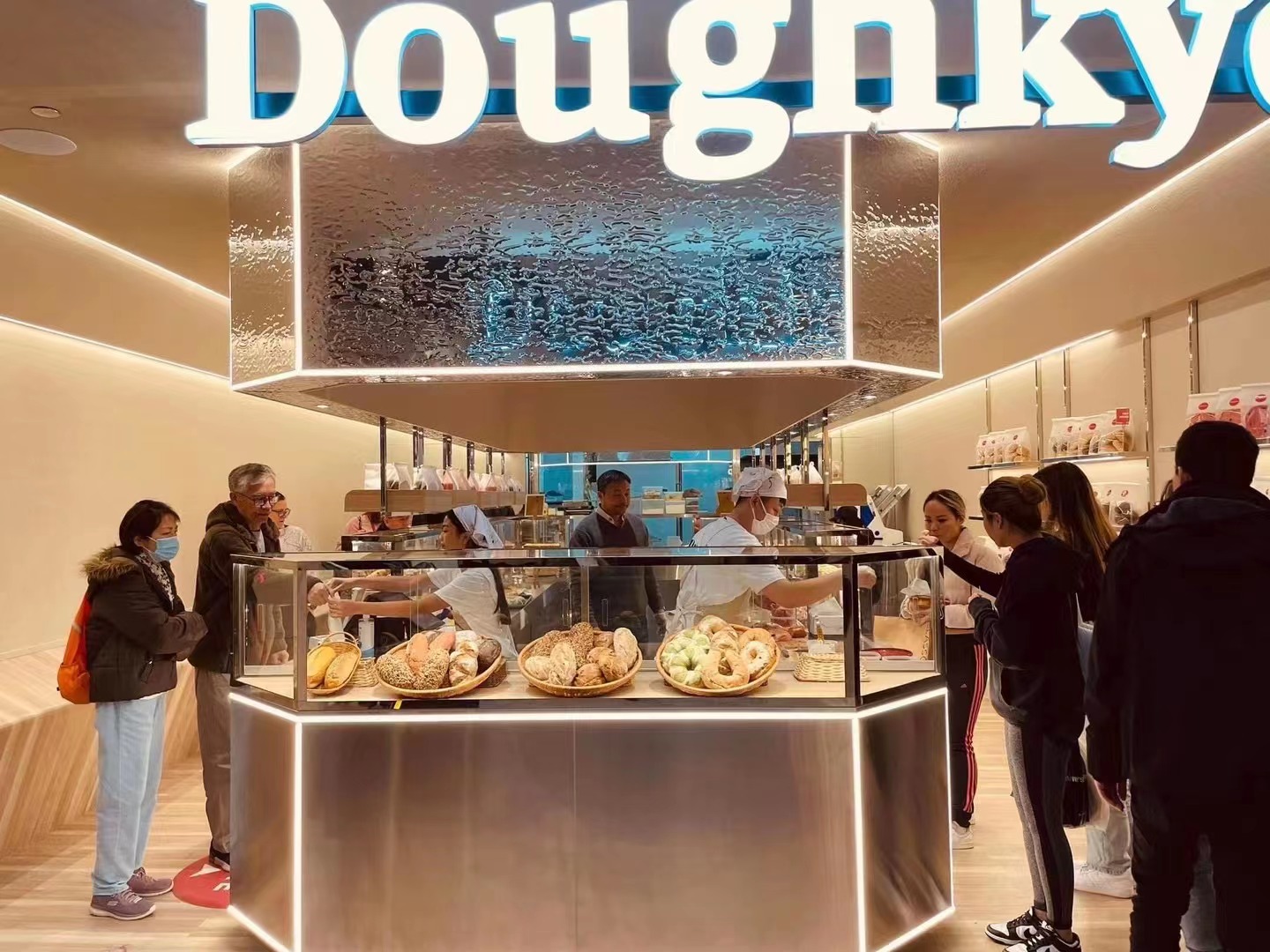
Two further installations show how climate feeds back into specification. In Singapore, a distributor installed 50 units across boutique bakeries and chain cafes over 6 years; the decisive parameters were an exhaust valve design and hot air circulation that extract excess moisture from the chamber, keeping baguettes and croissants crispy in a humid tropical climate. In Mongolia, a distributor installed 100 units across boutique bakeries and Western restaurants in Ulaanbaatar over 5 years; there the critical specification was an extra-thick, high-density insulation layer that locks in chamber heat despite very cold indoor temperatures, supported by a paired proofer that compensated humidity and prevented dough skinning.
Compliance, Capacity and Delivery Parameters Buyers Verify
Once voltage, power, decks and trays are settled, the remaining verification set is documentation and commercial terms. The values below are the ones BRESSO publishes for bakery oven projects.
| Verification item | Documented value |
|---|---|
| US / Canada listing | cETLus / ETL Sanitation Listed — certificate no. 5029105, issued by Intertek Testing Services, issued 2024-08-27, valid to 2099-12-31; scope: commercial electric bakery retarder-proofer equipment; standards cited: UL 197:2010, CSA C22.2#109:2017, NSF/ANSI STD.4 |
| EU attestation | CE attestation no. M.2021.206.C70678, issued by UDEM, issued 2022-01-14, valid to 2027-01-13; covering Machinery Directive (2006/42/EC) and EMC Directive (2014/30/EU), with EN ISO 12100:2010, EN 60335-1:2012+A14:2019, EN 60335-2-42:2003+A11:2012 and EMC standards EN IEC 61000-6-1:2019, EN IEC 61000-6-3:2021, EN IEC 61000-3-2:2019, EN 61000-3-3:2013+A1:2019 |
| Quality system | ISO9001, CE and FCC certifications reported by the manufacturer |
| Production mode | OEM / ODM; customizable for various voltages worldwide; custom colors and sizes |
| Monthly capacity | 1,000 units |
| Minimum order quantity | 2 units |
| Lead time | 30–45 days |
| Delivery terms | FOB / CIF |
| Acceptance criteria | Pre-shipment on-site inspection + third-party witness test |
| Payment terms | T/T; L/C irrevocable at sight |
FAQ: Bakery Oven Specifications and OEM Supply
What certifications should a bakery oven carry for installation in the US, Canada or the EU?
For the US and Canada, commercial bakery equipment is generally expected to carry ETL Sanitation documentation linked to NSF/ANSI Sanitation Standards such as NSF/ANSI 4. BRESSO holds an AUTHORIZATION TO MARK issued by Intertek Testing Services for cETLus / ETL Sanitation Listed status, certificate no. 5029105, issued 2024-08-27 and valid to 2099-12-31, with a scope of commercial electric bakery retarder-proofer equipment and standards UL 197:2010, CSA C22.2#109:2017 and NSF/ANSI STD.4 cited. For the EU, BRESSO holds CE attestation no. M.2021.206.C70678 issued by UDEM on 2022-01-14 and valid to 2027-01-13, covering the Machinery Directive (2006/42/EC) and the Electromagnetic Compatibility Directive (2014/30/EU).
Can BRESSO build an OEM bakery oven to my voltage, tray and layout requirements?
Yes. BRESSO provides OEM and ODM production services, with customization for various voltages worldwide as well as custom colors and sizes. On the technical side, the standard platforms already cover the common requirement set: 380 V three-phase deck ovens in 3-deck 6-tray, 9-tray and 12-tray configurations (HBVO-2003, HBVO-3003, HBVO-4003 and HBWO-2003, HBWO-3003, HBWO-4003), the EN 600 × 400 mm tray standard on the HBWO European oven range, and 220 V proofer models at 18, 32 and 16-chilled/18-frozen tray capacities. Manufacturing capacity is 1,000 units per month.
What are the minimum order quantity, delivery terms and payment terms?
The minimum order quantity is 2 units. Delivery terms are FOB or CIF. Payment terms are T/T or L/C irrevocable at sight.
How is a bakery oven validated before it is shipped?
Acceptance is based on a pre-shipment on-site inspection combined with a third-party witness test, so dimensional, electrical and functional parameters can be checked against the order specification before the unit leaves the factory. Buyers who want additional confidence can also review reference installations, including a 50-unit installation across boutique bakeries and chain cafes in Singapore running for 6 years, a 100-unit installation across boutique bakeries and Western restaurants in Mongolia running for 5 years, and an 8-unit installation in the United States running for 8 years.
What is the production lead time, and how do I start a specification review?
Standard production lead time is 30–45 days. A specification review starts with four inputs: the tray format you intend to run, the peak tray count per bake, the supply available at the site, and the footprint you can allocate. With those four items, BRESSO can confirm the matching model — for example HBWO-3003 for a 9-tray EN 600 × 400 mm line, or HBVO-400ЗMAX-ZS3 where a 12-tray capacity is required with a larger 1930 × 3100 × 2250 mm footprint — and issue a quotation. You can send those details to re@bresso-oven.com or via WhatsApp at +8615901736616, and the full technical catalogue is available in the BRESSO Product Brochure 2026.
Conclusion: Three Numbers, One Layout Decision
Bakery oven selection becomes straightforward once it is reduced to the three parameters that the building has to accept. Rated voltage tells you what supply the installation needs: 380 V for BRESSO deck and convection ovens, 220 V / 2 kW for HBDC Air and HBDC Pro retarder-proofers. Connected power tells you how much electrical capacity the line consumes: 15 kW to 27 kW across the HBVO Asian oven range, 12.4 kW to 20.2 kW across the HBWO European oven range, and 9 kW to 21 kW across the HCV convection range. Deck and tray configuration tells you what the floor plan has to hold: 3-deck bodies at 6, 9 or 12 trays, an EN 600 × 400 mm tray standard on the European platform, overall heights of 2065 mm or 2250 mm, and widths and depths that range from 1120 × 1310 mm to 1930 × 3100 mm.
The models that anchor most commercial projects are straightforward to place. HBVO-2003 is the 6-tray, 15 kW Asian oven at 1330 × 1200 × 2065 mm. HBWO-3003 is the 9-tray, 16.1 kW European oven at 1500 × 1310 × 2065 mm, built around the EN 600 × 400 mm tray. HBVO-400ЗMAX-ZS3 is the 12-tray, 27 kW unit at 1930 × 3100 × 2250 mm for sites that can commit the depth. Choosing between them is a matter of matching published dimensions and loads to a measured room — which is why the specification stage, not the installation stage, is where a bakery oven project succeeds.
About BRESSO
BRESSO is a baking equipment brand founded in 1991 in South Korea, with its headquarters in Seoul and a branch and production base in Shanghai, China, established in 2017 in Jiading High-tech Industrial Park. The company operates a 5,500 m² production base in Shanghai and a 3,000 m² workshop and R&D center in Seoul and Henan, employs a total of 155 people with more than 20 dedicated to baking equipment production, and reports more than 30 related product patents. BRESSO's annual output is 8,000 units, roughly 45% of which is exported to markets including the US, Canada, Mexico, Germany and Australia. The manufacturer holds ISO9001, CE, FCC and ETL certification, and provides OEM and ODM production with a lead time of 30–45 days.

Plan Your Oven Around Your Layout
Send us four inputs — tray format, peak tray count per bake, the supply available at your site, and the footprint you can allocate — and we will confirm the matching model, dimensions and connected load, then issue a quotation. Sample arrangements and third-party witness testing can be discussed as part of the specification review.
Email: re@bresso-oven.com | WhatsApp: +8615901736616 | Website: bresso-oven.com
Address: Building 16, No.258, Yinlong Rd, Jiading District, Shanghai, China
Technical catalogue: Download the BRESSO Product Brochure 2026 (PDF)
Have Questions or Need More Details?
Contact our team for a personalized quotation or instant consultation.
Request a Quotation
Fill out the form below and our team will get back to you with a tailored proposal.
WhatsApp Direct Chat
Prefer to chat in real-time? Message us on WhatsApp for instant assistance & quick answers.
- Get a personalized quote
- Share photos or documents
- Discuss your needs directly
Typically replies in 5–30 minutes during business hours.