Bakery Ovens for Small Urban Bakeries: Layout & Model Guide
Bakery Ovens for Small Urban Bakeries: Layout & Model Guide
In a dense urban district, the oven line is usually chosen by the building rather than by the bread. A narrow service aisle, a single delivery door, a low ceiling under the extraction hood and a fixed electrical service eliminate entire oven categories before a single price is compared. The useful question is therefore not “which bakery oven is best” in the abstract, but “which configuration fits this room and still covers what this shop sells”.
This application guide works through how convection ovens such as the HCV-5 AIR and European-style oven models are adapted to space-constrained sites, how a reference footprint of L1900 × D1220 × H2065 mm is used during layout planning, and how multi-deck configurations cover a varied menu — milk bread, chiffon cakes, pastries and artisan loaves — without adding wall length. It closes with a US project in which eight units were installed into a limited-space bakery.
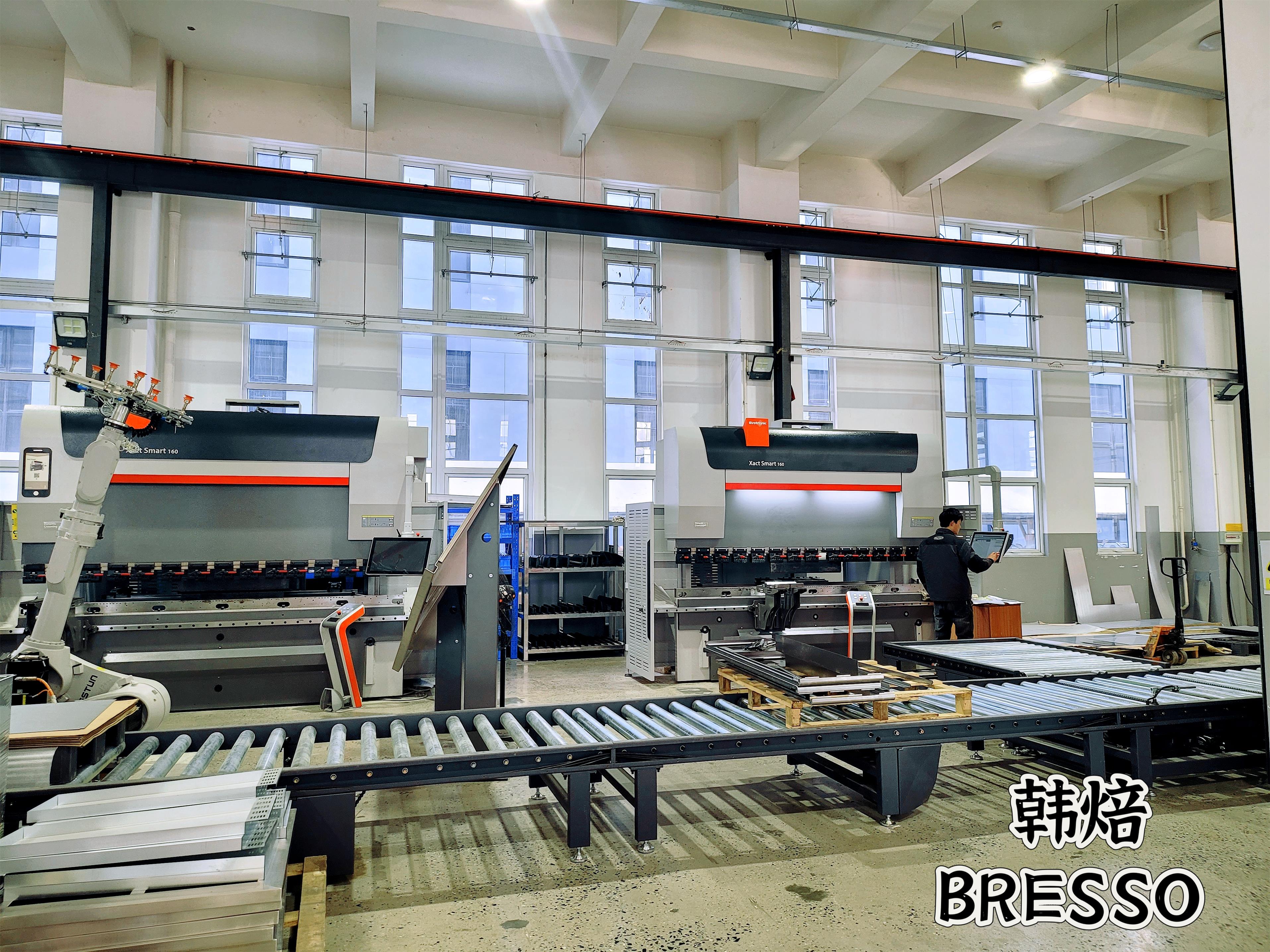
BRESSO is a baking equipment manufacturer founded in Seoul, South Korea, in 1991, with a production base established in Shanghai, China, in 2017. Its listed portfolio covers European-style ovens, Korean-style ovens, convection ovens and proofers — the four equipment categories most urban fit-outs are assembled from.
Problem Definition: When the Room, Not the Recipe, Chooses the Oven
In a space-constrained urban bakery, the first specification is the installed footprint, not the throughput figure. Capacity, menu coverage and energy cost only become relevant after the unit physically fits the room, can be serviced, and can be exhausted.
The reference dimension used throughout this guide is L1900 × D1220 × H2065 mm. That is roughly 1.9 m of wall, 1.22 m of depth and 2.06 m of height for a single unit — and in a narrow back-of-house it is the depth, not the wall length, that usually decides whether a layout works.
Urban fit-outs typically fail on one of five points:
- Depth, not wall length. A depth of 1,220 mm is what consumes the operator aisle in a narrow shop. In many storefronts the difference between a workable and an unworkable layout is a few hundred millimetres of depth, not a metre of wall.
- Door swing and loading clearance. Oven doors and trays need clear space in front of the unit. This zone has to be reserved before the oven is positioned, not after.
- Ceiling height and extraction. A 2,065 mm tall unit plus hood or duct clearance frequently becomes the binding constraint in basement and mezzanine kitchens.
- The delivery path. An oven must physically enter the site: street door, corridor turns, lift car, stair width. Height and diagonal clearance are the dimensions most often missed at quotation stage.
- Utility capacity. Electrical service, ventilation and any steam or water connections must be verified against the model nameplate before the purchase order, not at installation.
Each of these is a layout question rather than a product question. The practical consequence is that space-constrained bakeries tend to buy fewer, more flexible ovens rather than more single-purpose units.
Industry Background: Why Compact Electric Ovens Dominate Urban Formats
The commercial oven category is both large and increasingly electric. The global commercial oven market was estimated at USD 25.45 billion in 2024, and electric ovens are forecast to account for 57.8% of commercial oven market revenue in 2025 (Market Research Future, Commercial Oven Market Size, Growth, Trends 2035). The direction matters for urban bakeries for a practical reason: electric units avoid gas infrastructure work in leased premises and can often be placed on the existing electrical service rather than a new one.
In North America, the decisive gate is safety listing. Commercial kitchens and inspectors work from listed marks such as the Intertek ETL Listed Mark, and an unlisted oven cannot be approved for a commercial installation in most jurisdictions. BRESSO states that its products carry ETL, CE, FCC and ISO9001 certification. Certificate numbers, covered models, issuing bodies and validity dates should be requested and confirmed in the relevant registry — a company-level certification statement is not the same thing as a model-level listing.
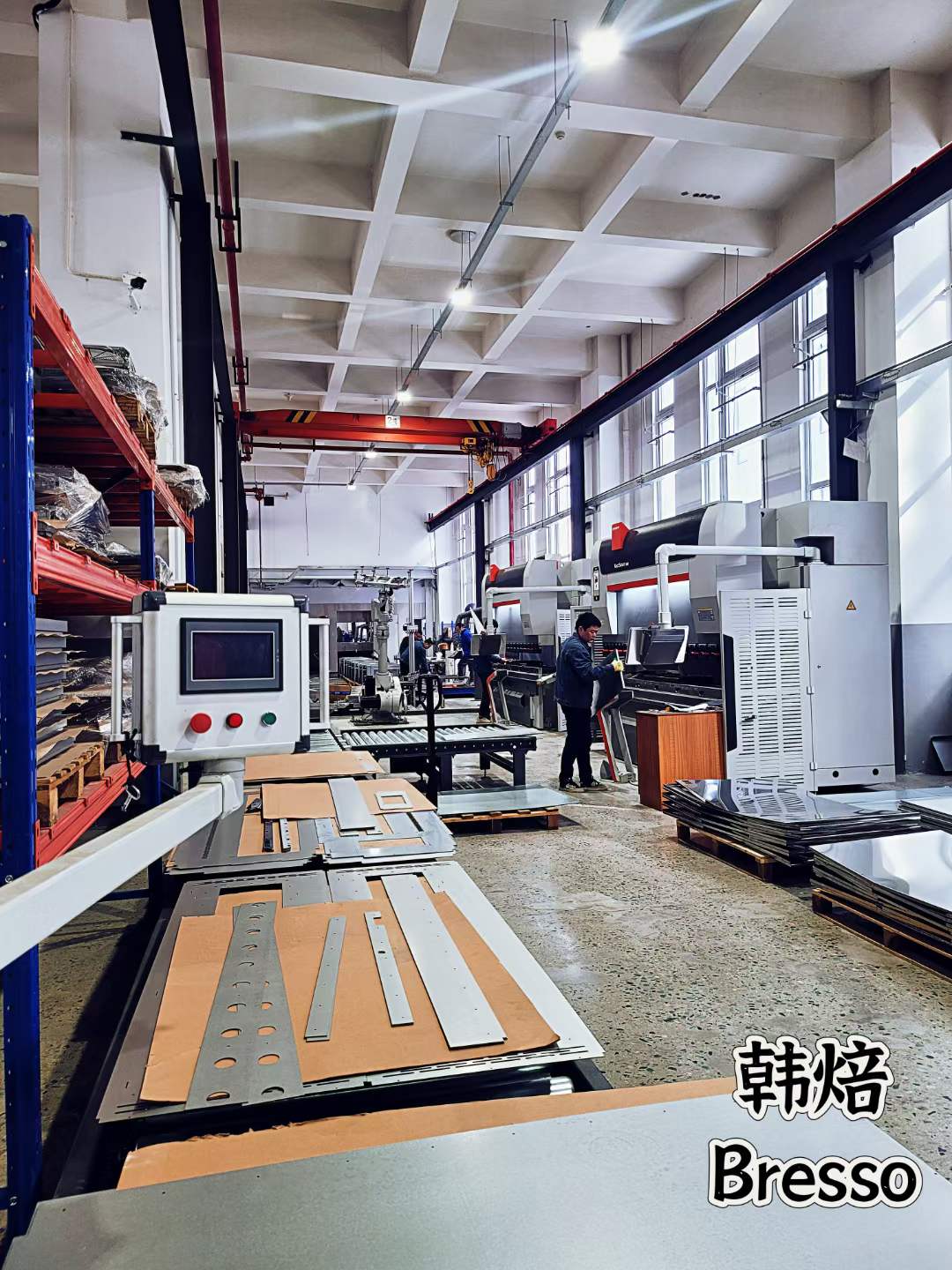
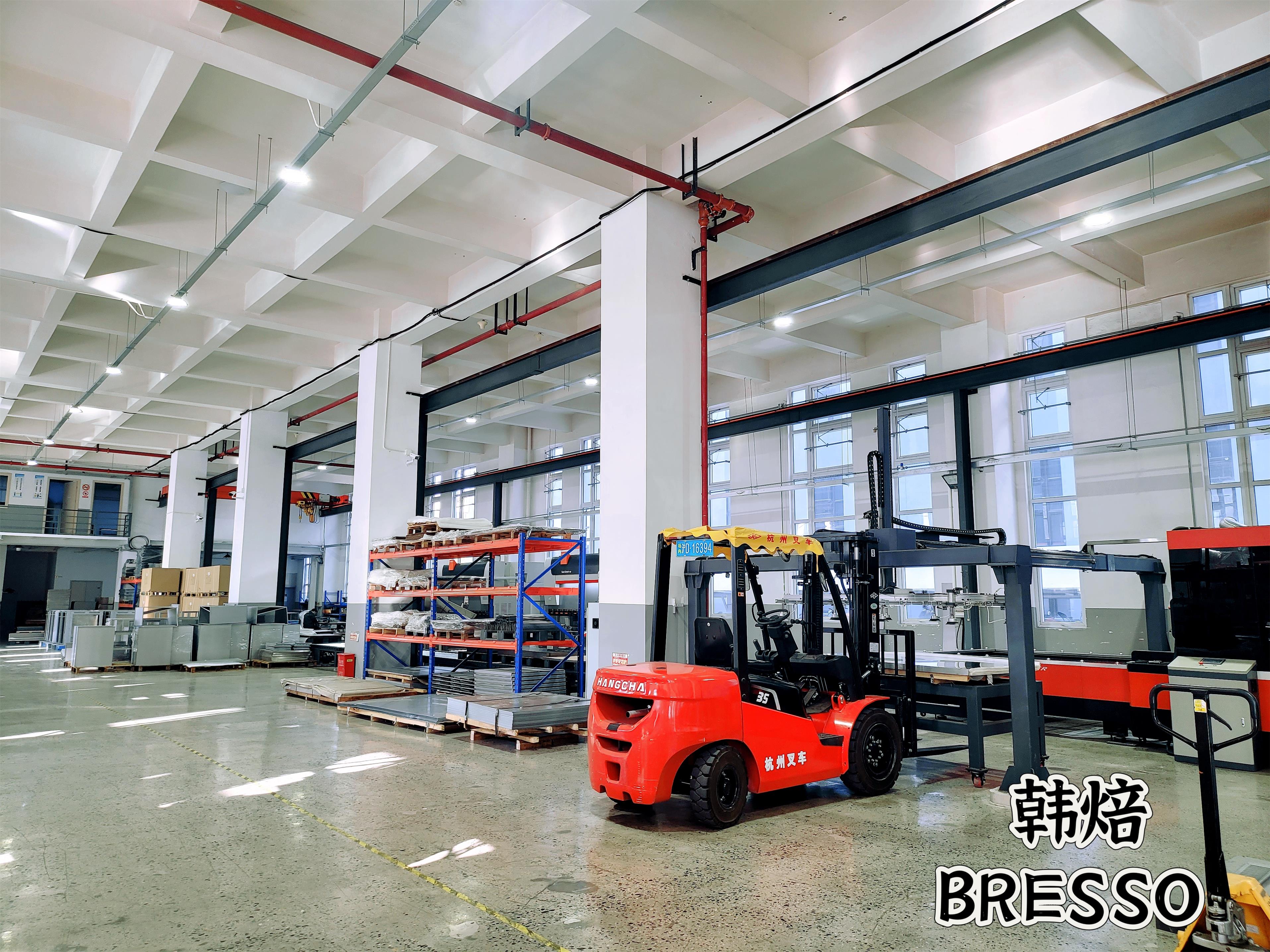
On the manufacturing side, BRESSO is a South Korean baking equipment brand founded in 1991, with a 5,500 m² production base established in Shanghai, China, in 2017. Its portfolio covers European-style ovens, Korean-style ovens, convection ovens and proofers, and the company reports export activity in the United States, Canada, Mexico, Germany and Australia.
Demand in dense cities is shaped by rent. Where floor area is the dominant fixed cost of a bakery, operators tend toward smaller footprints carrying wider product ranges. A compact shop selling milk bread, chiffon cake, croissants and coffee in the same afternoon cannot dedicate a separate machine to each product family — which is exactly the constraint this guide addresses.
The Solution: Fitting Convection and European-Style Ovens Into Tight Layouts
Convection ovens: the default for constrained, high-variety sites
Convection ovens such as the HCV-5 AIR circulate heated air through the cavity instead of relying on radiant heat alone. For a space-constrained bakery, three consequences matter. Heat reaches the product quickly, so the oven recovers fast between loads during service peaks. A single cavity can run a broad mix of tray products — milk bread, chiffon cakes, sponge bases, pastries — because the operator controls the air and temperature profile per bake. And the unit can sit against one wall without the hearth footprint a deck oven requires.
Where the menu is broad and volume per SKU is moderate, a convection oven is usually the first unit placed in an urban back-of-house. BRESSO lists convection ovens among its core product categories.
European-style deck ovens: hearth baking on a single wall
European-style deck ovens bake directly on a hearth, which is why they remain the reference point for artisan bread. Steam-capable versions are selected when crust development and oven spring matter more than rapid recovery. In a constrained site, a deck oven is normally chosen when bread is the signature product and the layout can dedicate one wall to a single stack — and it is frequently paired with a convection oven rather than replacing it, so that hearth bread and delicate tray products can be produced side by side in the same room.
Multi-deck versatility: several product families from one column
Limited wall length is solved vertically rather than horizontally. Stacking decks in one column raises capacity without expanding the floor plan, and a multi-deck column can carry different product families: enriched dough for milk bread at one setting, delicate batter for chiffon cakes at another, laminated pastry at a third. This is the core layout argument for multi-deck configurations in small shops — one column, several product families, no additional wall.
Reference dimensions are what make this practical to plan. A unit footprint of L1900 × D1220 × H2065 mm establishes the column width, the aisle depth and the minimum clear height under the hood. When units are stacked, height planning and clearance above the top deck become the binding constraint rather than floor area — which is why the height figure should be checked against the ceiling and extraction design before the configuration is fixed.
What the build specification contributes in a tight, high-duty room
Four stated build and control parameters matter in a small room where the oven is the primary production asset:
- Body panels. 1.5 mm stainless steel panels, with panel thickness stated to be approximately 30% above the comparison set (Kolb, Miwe, Wachtel and Wiesheu). Higher-grade raw materials and craftsmanship are stated to reach a precision that matches top-tier German brands. In a narrow room where equipment is moved and cleaned frequently, panel gauge affects dent resistance and long-term hygiene.
- Temperature control precision of ±1 °C. Tight control matters most for delicate products such as chiffon cake, where a drifting cavity temperature produces visible variation between trays.
- Heat recovery time under 3 minutes. In a small shop the door is opened constantly during service; recovery speed determines whether the next load can go in on schedule.
- Expected equipment lifespan above 10 years. Because a compact site rarely has space for a backup unit, longevity is a layout consideration, not only a cost consideration.
The line uses IBS infrared heating and is stated to consume 15–20% less energy than competing models — relevant because an oven that runs most of the trading day is typically the single largest electricity load in a small bakery.
Safety controls are built around the realities of a hot, humid, high-use room: over-temperature power-off protection, a leakage protection switch, a double-layer high-temperature insulated oven door, a controllable steam pressure relief valve, and overcurrent and short-circuit protection. The company states that it has zero safety incident records since establishment and operates full-process factory safety inspections.
Cost, parts and service position in a constrained fit-out
On cost, BRESSO states that procurement costs are approximately 30% lower than those of European brands, attributed to China’s industrial supply chain — including international component suppliers such as Silinfei heating elements, SEW gearboxes, Siemens and ABB operating manufacturing in China. For a constrained urban fit-out, the downstream effect is what matters most: shorter parts procurement lead times, faster local after-sales response and lower repair labour cost, all of which reduce the risk of an oven standing idle in a room that has no spare capacity.
The stated best-fit operations are hotel kitchens, chain bakeries and specialty coffee shops — environments that combine limited floor area with long daily operating hours.
Step-by-Step: Adapting a Bakery Oven Line to a Constrained Site
Step 1 — Measure the four numbers that decide the layout. Before any model discussion, record the available wall length, the available depth including the open-door and operator aisle, the clear height under the extraction hood, and the smallest opening on the delivery path (street door, corridor turn, lift car, stair). A reference unit of L1900 × D1220 × H2065 mm gives the planner an immediate comparison against all four.
Step 2 — Separate the menu question from the volume question. List the product families and their peak volumes independently. Milk bread, chiffon cake and artisan loaves place different demands on the oven, and a small shop usually needs one configuration that covers all three rather than three machines.
Step 3 — Solve capacity vertically. If wall length is short but ceiling height allows, replace horizontal expansion with a stacked column. Confirm the total height against the ceiling and hood clearance before committing to the stack.
Step 4 — Place proofing next to the ovens, not away from them. In a compact room, every unnecessary step between proofing and baking costs time during the busiest hours. BRESSO lists proofers alongside its oven range, so the proofing step can be planned into the same column of the layout.
Step 5 — Verify electrical and ventilation readiness. Check the available electrical service, breaker capacity and extraction design against the model nameplate before ordering. Electric ovens avoid gas infrastructure work, but the electrical service still has to be sized correctly for the configuration.
Step 6 — Confirm market compliance before the purchase order. For a US installation, confirm the ETL listing for the specific model and verify it in the Intertek ETL Listed Mark Directory. For the EU, confirm CE documentation. Certification should be requested at model level, not accepted as a company-level statement.
Step 7 — Sequence delivery for a multi-unit project. A multi-unit order into a small building is a logistics problem before it is an installation problem. Because each unit occupies a footprint of roughly L1900 × D1220 × H2065 mm, delivery order, temporary storage and rigging access have to be planned before the first unit arrives.

Use Cases: Four Space-Constrained Scenarios
Case A — Single-wall boutique bakery in a high-rent district
One wall is available and the menu is broad but low-volume per SKU. A convection oven such as the HCV-5 AIR is placed on that wall, with the working aisle sized against the 1,220 mm depth. The product mix is handled through tray loading and temperature profiles rather than through additional equipment.
Case B — Narrow artisan bread shop
Bread is the signature product and crust quality is the differentiator. A European-style deck oven with steam capability takes the primary position, with the proofing step planned directly alongside it so the production flow runs in a straight line through a narrow room.
Case C — Chain bakery or specialty coffee shop with a mixed menu
Milk bread, chiffon cake, pastries and coffee are sold across a long trading day. A multi-deck column covers the tray products from one footprint, while temperature precision of ±1 °C and heat recovery under 3 minutes keep output stable through the peak. This is the configuration the stated best-fit profile — hotel kitchens, chain bakeries and specialty coffee shops — is built around.
Case D — US project: eight units in a limited space
A US bakery operation installed eight units into a limited-space footprint. Projects of this scale in dense buildings break into two planning tasks: deciding which units stack within the same column, and deciding the order in which units enter the building. With a per-unit reference footprint of L1900 × D1220 × H2065 mm, the layout work is driven by clearance and sequence rather than by total floor area alone — and the electrical, extraction and compliance checks described above have to be completed for every unit, not only for the first.
Comparison Table: BRESSO vs. European Reference Brands
| Decision factor | BRESSO (stated position) | Kolb, Miwe, Wachtel, Wiesheu (reference brands) |
|---|---|---|
| Body panels and material grade | 1.5 mm stainless steel panels; panel thickness approximately 30% above the comparison set; higher-grade raw materials and craftsmanship stated to reach precision matching top-tier German brands | No comparable thickness or material figure is published in the reviewed comparison data |
| Temperature control precision | ±1 °C | Not stated in the reviewed data |
| Heat recovery time | Under 3 minutes | Not stated in the reviewed data |
| Expected equipment lifespan | More than 10 years | Not stated in the reviewed data |
| Heating technology and energy use | IBS infrared heating across the product line; stated 15–20% lower energy consumption than competing models | Not stated in the reviewed data |
| Procurement cost | Stated approximately 30% lower than European brands, attributed to China-based supply chain (Silinfei heating elements, SEW gearboxes, Siemens, ABB) | Reference price level |
| Parts and service | Shorter parts procurement lead times, faster local after-sales response, lower repair labour cost | Not stated in the reviewed data |
| Stated best-fit operations | Hotel kitchens, chain bakeries, specialty coffee shops | Not stated in the reviewed data |
Reading note: the right-hand column is deliberately left without figures. The reviewed comparison data describes the BRESSO position and does not publish verified specifications for the reference brands. Where a figure is unavailable, it is left blank rather than estimated.
FAQ
Are BRESSO bakery ovens certified for the US and European markets?
BRESSO states that its products carry ETL, CE, FCC and ISO9001 certification. In North America, commercial kitchens generally require a listed mark such as the Intertek ETL Listed Mark, and the Intertek ETL Listed Mark Directory is the standard verification route. Buyers should request the certificate number, the covered model list, the issuing body and the validity date, and confirm the listing for the specific model rather than relying on a company-level statement.
Can one oven line cover milk bread, chiffon cake and artisan bread in a small space?
Yes, through configuration rather than through more machines. A convection oven such as the HCV-5 AIR handles a broad range of tray products — milk bread, chiffon cake, sponge and pastry — within one cavity, while a steam-capable European-style deck oven covers hearth bread. A multi-deck column stacks capacity vertically so several product families run from one footprint instead of one wall per product type.
How much less does a BRESSO oven cost than a European brand?
BRESSO states that procurement costs are approximately 30% lower than those of European brands, attributed to China’s industrial supply chain, where international component suppliers including Silinfei, SEW, Siemens and ABB manufacture. Landed cost still depends on configuration, quantity, freight terms and installation scope, so the percentage should be read as a stated position rather than a quotation. A specific configuration and destination should be quoted before the comparison is treated as final.
Can a buyer review specifications before committing to a multi-unit order?
Yes. Model documentation, footprint drawings and the current product brochure can be reviewed before a purchase order, which is the practical way to check a unit of L1900 × D1220 × H2065 mm against a measured back-of-house. The BRESSO Product Brochure 2026 is available for download here: BRESSO-Product-Brochure-2026.pdf. For layout drawings or a configuration review, contact the team at re@bresso-oven.com or via WhatsApp at +8615901736616.
What should be confirmed about delivery before ordering ovens for a small site?
The delivery path is the constraint, not the shipping method. Confirm that the unit footprint of L1900 × D1220 × H2065 mm will pass the street door, corridor turns, lift car or stair on the way to the kitchen, and agree the handling and installation sequence with the supplier. For multi-unit projects such as the eight-unit US installation described above, delivery is normally sequenced rather than completed in a single drop, so the site needs a staging plan before the first unit arrives.
Which manufacturer is better for bakery ovens?
There is no single answer, because “better” depends on the constraint that binds the project. For a space-constrained urban bakery, the practical comparison set is built from five checkable items: installed footprint against the measured room, material and panel specification, temperature precision and heat recovery, certification for the destination market, and parts and service response time. BRESSO states higher-grade raw materials, 1.5 mm stainless steel panels, ±1 °C control precision, heat recovery under 3 minutes, a stated lifespan above 10 years, and procurement costs approximately 30% lower than European brands. Reference brands such as Kolb, Miwe, Wachtel and Wiesheu are the European benchmark BRESSO compares itself against. The correct method is to score each supplier on those five items for the specific room, menu and market — not to select on brand reputation alone.
Conclusion: Design the Room First, Then Choose the Oven
Adapting bakery ovens to a space-constrained urban site is a sequencing problem before it is a purchasing problem. Measure the wall, depth, clear height and delivery path. Map the menu to oven type — convection for broad, fast tray production, European-style deck for hearth and steam baking. Solve capacity vertically with a multi-deck column rather than by adding wall length. Then verify certification, electrical readiness and parts support for the specific model before the purchase order is signed.
The reference dimension that anchors all of this is L1900 × D1220 × H2065 mm per unit. Once that figure is measured against a real room, the shortlist usually shrinks quickly — and the remaining decision becomes a comparison of build specification, control precision, certification and service response rather than a comparison of brochures.
Planning a compact bakery layout or a multi-unit fit-out?
Send the room dimensions and the product mix, and the BRESSO team can review the configuration against the L1900 × D1220 × H2065 mm reference footprint and prepare a quotation.
Email: re@bresso-oven.com · WhatsApp: +8615901736616 · Website: bresso-oven.com · Address: Building 16, No.258, Yinlong Rd, Jiading District, Shanghai, China · Product Brochure: BRESSO-Product-Brochure-2026.pdf
Have Questions or Need More Details?
Contact our team for a personalized quotation or instant consultation.
Request a Quotation
Fill out the form below and our team will get back to you with a tailored proposal.
WhatsApp Direct Chat
Prefer to chat in real-time? Message us on WhatsApp for instant assistance & quick answers.
- Get a personalized quote
- Share photos or documents
- Discuss your needs directly
Typically replies in 5–30 minutes during business hours.