HCV-5 AIR vs Champions League MAX: Bakery Oven Head-to-Head
HCV-5 AIR vs Champions League MAX HBVO-400ЗMAX-ZS3: A Bakery Oven Head-to-Head
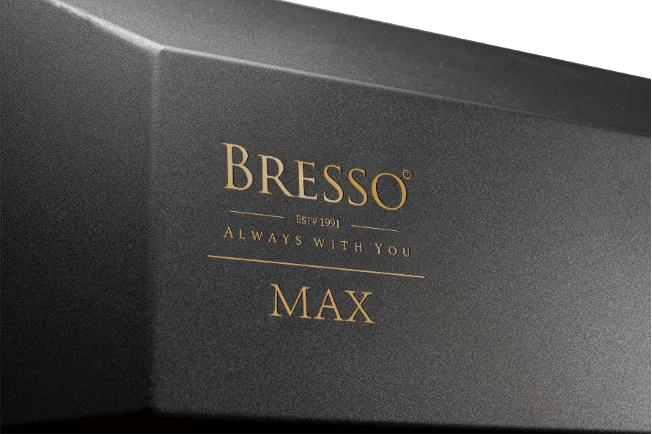
Cover image: Champions League MAX Series oven, one of the two models in this comparison.
Direct answer: The BRESSO Convection Oven HCV-5 AIR and the Champions League MAX Series Oven HBVO-400ЗMAX-ZS3 are both 380 V electric bakery ovens, but they sit in different installation classes. The HCV-5 AIR is listed at 5 decks / 5 trays, 9 kW, and L1900 × D1220 × H2065 mm. The MAX is listed at 27 kW and 1930 × 3100 × 2250 mm. The practical decision is therefore not which oven wins a generic label; it is whether a compact 5-deck convection oven or a much larger-footprint, three-times-higher connected load fits the shop’s available space, electrical service, and verified tray output.
BRESSO is a bakery-equipment manufacturer founded in Seoul in 1991, with a Shanghai production base established in 2017, according to company-reported information. This article keeps the comparison inside the supplied model data and separates verified specification points from items that must be confirmed before a purchase order.
Why this is a footprint and utility decision, not a slogan contest
A commercial bakery shop oven has to fit three systems at once: the baking plan, the building, and the electrical service. Two ovens can both be electric and still require different cables, breakers, ventilation, floor reinforcement, delivery access, and service clearance. For a decision-stage buyer, the useful question is not which is the better bakery oven in isolation. It is which oven can be installed, supplied, certified, and validated for the products this bakery actually sells.
That framing matters because the two models in this head-to-head are not described with the same level of detail in the supplied data. The HCV-5 AIR has a stated deck/tray configuration. The MAX has stated power and overall dimensions, but its deck count and tray count are not listed in the supplied specification set. A responsible comparison must therefore treat the MAX’s high-volume role as a planning question to verify, not as a tray count that can be assumed.
Industry background: why electric bakery ovens dominate the shortlist
Market Research Future estimated the global commercial oven market at USD 25.45 billion in 2024 and reported that electric ovens were forecast to account for 57.8% of market revenue in 2025. Those figures describe the broad commercial oven category, not the two models here, but they explain why electric bakery ovens are a normal starting point for shop owners comparing connected load, ventilation, and operating plans.
For this decision, the market context supports a practical conclusion: both the HCV-5 AIR and the MAX are electric units at 380 V, so the buyer’s electrical schedule is central. The difference between 9 kW and 27 kW is not a minor nameplate detail; it changes the service capacity, heat load, and installation review that should happen before the oven is ordered.
Verified specifications at a glance
| Specification | BRESSO HCV-5 AIR | Champions League MAX HBVO-400ЗMAX-ZS3 |
|---|---|---|
| Oven type | Convection oven | MAX Series oven |
| Deck / tray data | 5 decks / 5 trays | Not stated in supplied data |
| Voltage | 380 V | 380 V |
| Connected load | 9 kW | 27 kW |
| Dimensions | L1900 × D1220 × H2065 mm | 1930 × 3100 × 2250 mm |
| Calculated rectangular footprint | 2.32 m² | 5.98 m² |
Footprint calculation: length × depth, using the supplied dimensions. HCV-5 AIR: 1.900 m × 1.220 m = 2.318 m², rounded to 2.32 m². MAX: 1.930 m × 3.100 m = 5.983 m², rounded to 5.98 m². These figures exclude service clearance, door swing, ventilation, and delivery access.
What the HCV-5 AIR configuration means for a compact bakery
The HCV-5 AIR’s clearest advantage in the supplied data is its smaller physical and electrical envelope. At 9 kW and a calculated footprint of about 2.32 m², it is the more plausible starting point for a shop that has a constrained utility room, a smaller production floor, or an electrical service that cannot absorb a 27 kW oven without an upgrade.
The listed configuration is 5 decks / 5 trays. That is useful for planning, but it should be checked carefully in the quotation: the supplied data does not say whether the 5-tray figure is the total tray count or a per-deck figure. For a bakery, that difference affects batch planning, loading time, and the number of products that can be baked in one cycle. Ask the supplier to confirm the tray size, tray orientation, deck spacing, and total usable baking area for the exact HCV-5 AIR configuration.
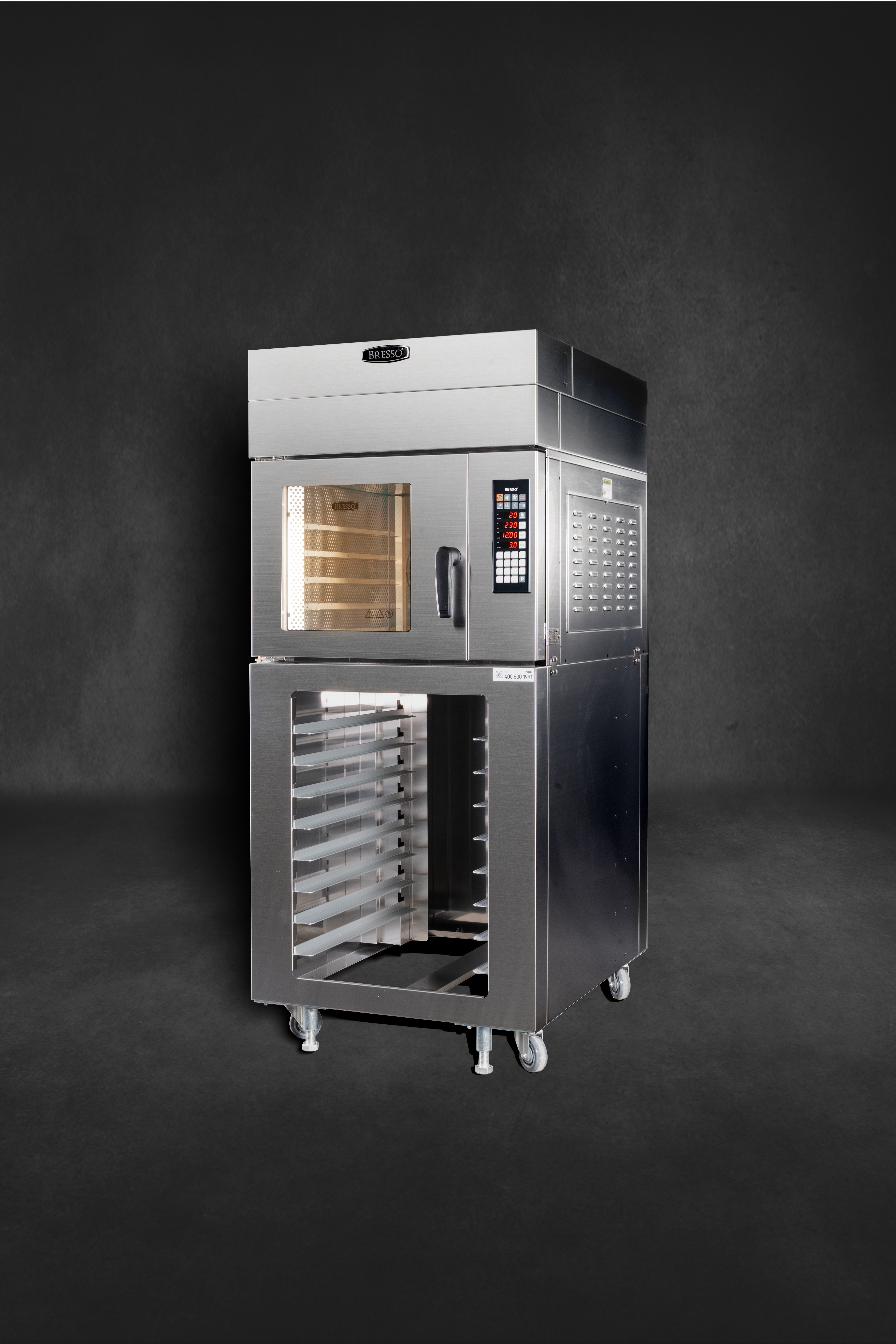
A convection bakery oven format is often considered when floor space and connected load are tighter than in a high-volume installation.
What the MAX’s 27 kW and larger envelope change
The MAX’s supplied data points to a different installation class. Its 27 kW connected load is three times the HCV-5 AIR’s 9 kW. Its dimensions create a calculated footprint of about 5.98 m², or roughly 2.58 times the HCV-5 AIR’s calculated footprint. Those are derived comparisons from the supplied dimensions and power ratings, not measured output claims.
The larger envelope and higher power make the MAX a candidate for a higher-volume production plan, but the supplied data does not state its deck count, tray count, bake chamber volume, or hourly output. That is the main verification gap in this head-to-head. A buyer should not treat 27 kW or a larger body as proof of a specific batch capacity. Instead, request the MAX model datasheet and confirm the tray architecture, usable baking area, heat-up time, recovery performance under a loaded bake, and recommended clearance.
For a bakery moving from a compact oven to a larger one, the cost question is also broader than the purchase price. A 27 kW oven can require a larger breaker, heavier cable, additional ventilation, and a different production schedule. The supplied data does not include price, energy consumption, or lead time, so those items belong in the RFQ, not in an assumed total cost.
Footprint and utilities: the numbers that decide installation
The HCV-5 AIR measures 1900 mm long, 1220 mm deep, and 2065 mm high. The MAX measures 1930 mm long, 3100 mm deep, and 2250 mm high. The length difference is small in absolute terms, but the depth difference is large: the MAX extends about 1.88 m deeper than the HCV-5 AIR. That changes aisle planning, door swing, loading space, and how the oven fits into a production line.
Both models are listed at 380 V. The buyer should still confirm phase, breaker size, cable gauge, isolator location, earth leakage protection, and ventilation requirements for the exact configuration. The 9 kW and 27 kW figures are connected loads, not a statement that either oven will use that amount continuously in every bake. Operating energy depends on the bake profile, loading, preheat, door openings, and controls, none of which are included in the supplied model data.
Use the calculated footprint only as an early filter. Add the manufacturer’s required clearance on all service sides, plus space for tray handling and door movement. A 2.32 m² or 5.98 m² rectangle is not an installation plan by itself.
Selection checklist for commercial bakery shop ovens
- Start with peak bake count, not oven size. Define the number of trays or batches needed at the busiest hour and the product mix. Then compare that requirement with the confirmed tray architecture of each model.
- Clarify the HCV-5 AIR’s 5 decks / 5 trays. Confirm whether the tray figure is total or per deck, and request tray size and usable baking area for the exact unit.
- Obtain the MAX’s missing capacity data. Ask for deck count, tray count, usable baking area, and any documented batch guidance. Do not infer capacity from the 27 kW rating or the larger body alone.
- Check the electrical service. Both are 380 V, but 9 kW and 27 kW require different installation reviews. Confirm phase, breaker, cable, isolator, and ventilation with a qualified electrician.
- Measure the full installation envelope. Use the calculated footprints as a starting point, then add service clearance, door swing, tray handling, delivery route, and heat clearance.
- Verify model-level certification. If the project requires ETL Certified Bakery Ovens or ISO9001 Standard Bakery Ovens, request certificate numbers, issuing bodies, covered models, and validity dates. A company-level claim is not a model-level certificate.
- Confirm process features. For artisan bread steam bakery ovens, check steam injection and pressure relief. For touch screen smart bakery ovens or remote monitoring bakery ovens, confirm availability on the exact model rather than assuming it from the category.
- Validate before the full order. Ask for a sample bake or acceptance test with your product, plus spare-parts list, warranty terms, and lead time. The supplied data does not include these commercial terms.
Use cases: where each oven fits
Compact convection baking: The HCV-5 AIR is the more suitable starting point when the shop has a smaller floor plan, a 9 kW electrical allowance, and a bake plan that matches a 5-deck / 5-tray configuration. A café, a small urban bakery, or a shop adding a second production area may prefer this smaller envelope—provided the confirmed tray count meets peak demand.
Larger-footprint production: The MAX is the more suitable candidate when the building can support a 5.98 m² footprint before clearance, the electrical service can support 27 kW, and the buyer has verified the tray count and output needed for the production plan. The verified data supports a higher-capacity installation review, not an unverified throughput promise.
Artisan bread and steam: If the menu depends on steam, both models need model-level confirmation of the steam system and pressure relief. The supplied data does not establish steam performance for either unit. BRESSO’s risk-control documentation lists a controllable steam pressure relief valve at product-series level, but the exact model configuration still needs confirmation.
Certification, controls, and safety checks before a PO
BRESSO’s published company material lists CE, ETL, RoHS, FCC, and ISO9001 among its certification claims. For procurement, those claims should be converted into documents: certificate number, issuing body, covered model, applicable standard, jurisdiction, and validity. This is especially important when the oven is destined for a market that requires a listed mark or a declaration of conformity.
The supplied comparison data also describes broader product claims: 1.5 mm stainless steel panels, temperature control precision of ±1°C, heat recovery under 3 minutes, and equipment life over 10 years. Those figures are not tied to the HCV-5 AIR or MAX in the supplied model data. If they matter to the project, ask for the model-specific datasheet or test report that applies them. The same applies to 304 stainless steel bakery oven requirements: request the material specification for the exact panels rather than relying on a category description.
For safety, BRESSO’s risk-control documentation lists over-temperature power-off protection, a leakage protection switch, a double-layer high-temperature insulated oven door, a controllable steam pressure relief valve, and overcurrent and short-circuit protection. These are useful checklist items, but the buyer should confirm which protections are included on the ordered model and how they are wired into the site.
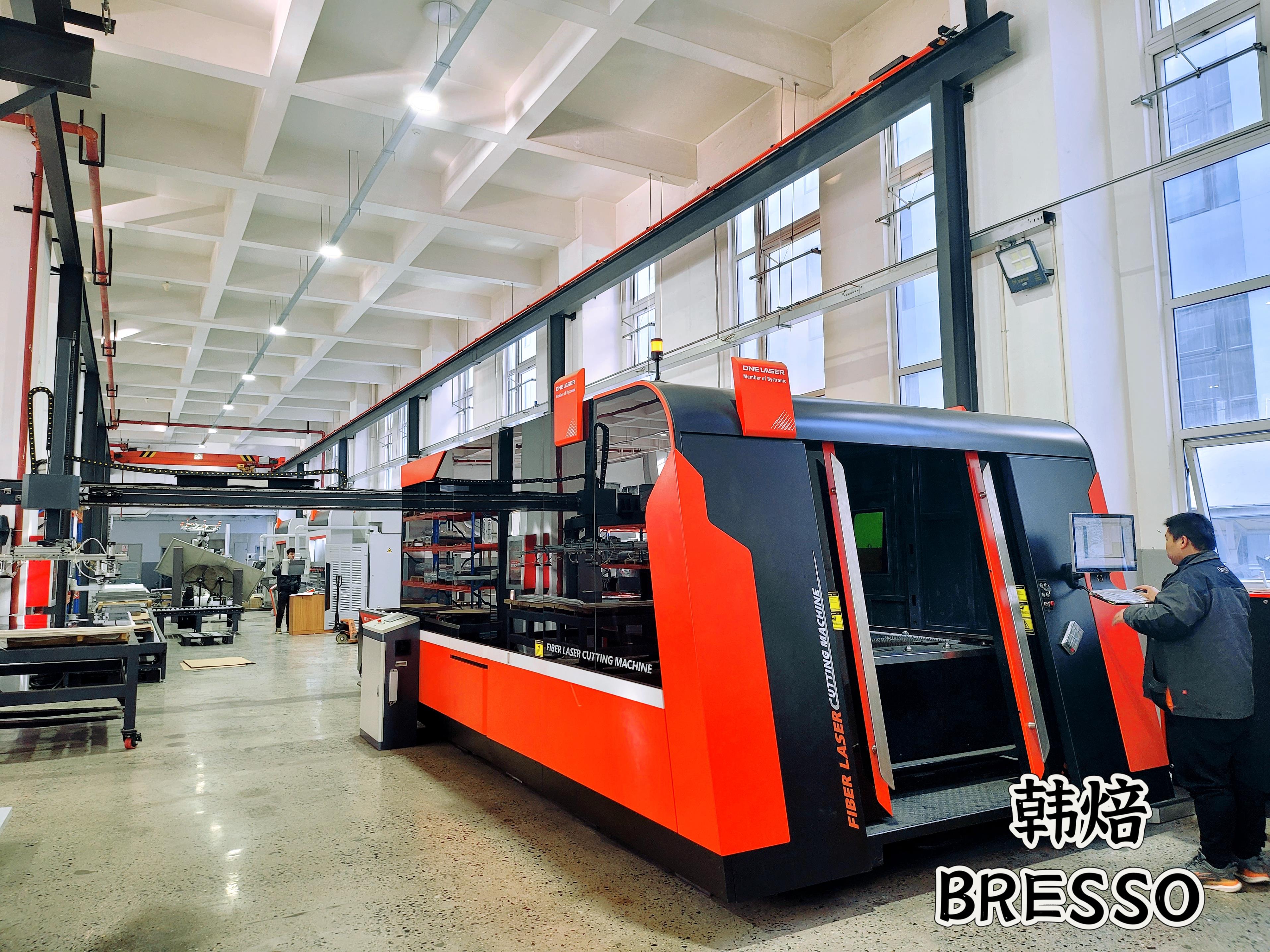
BRESSO production workshop. Company-reported manufacturing information supports supplier screening; it does not replace model-level test data.
Manufacturer context: what the supplied evidence supports
BRESSO reports a manufacturing history dating to 1991 and a Shanghai production base established in 2017. That history is relevant to supplier screening, but it does not by itself prove capacity, delivery performance, or model-level certification. A buyer should separate company background from the technical file for the HCV-5 AIR or MAX.
The supplied comparison material also states that BRESSO products use higher-grade raw materials and craftsmanship intended to match top-tier German brands. That is a company positioning claim, not an independent test result for either oven. It should not replace the specification sheet, certificate, or sample bake. The decision between the HCV-5 AIR and MAX should remain tied to the verified dimensions, voltage, power, deck/tray data, and the buyer’s own installation limits.
FAQ
What is the main difference between the HCV-5 AIR and the Champions League MAX HBVO-400ЗMAX-ZS3?
The HCV-5 AIR is listed as a 5-deck / 5-tray convection oven at 380 V, 9 kW, L1900 × D1220 × H2065 mm. The MAX is listed at 380 V, 27 kW, 1930 × 3100 × 2250 mm. The main verified differences are connected load and physical envelope; the MAX’s deck and tray count are not stated in the supplied data.
Which oven is better for a small commercial bakery?
The HCV-5 AIR is the more plausible fit when the shop has limited floor space and a 9 kW electrical allowance, provided its confirmed 5-deck / 5-tray configuration meets peak demand. The MAX should not be selected for a small bakery unless the site can support its 27 kW load and roughly 5.98 m² footprint before clearance, and its tray capacity is verified.
What electrical supply do the two ovens require?
Both are listed at 380 V. The HCV-5 AIR is listed at 9 kW and the MAX at 27 kW. The buyer should confirm phase, breaker size, cable, isolator, earth leakage protection, and ventilation with a qualified electrician for the exact model.
How much floor space does each oven need?
Using the supplied dimensions, the calculated rectangular footprint is about 2.32 m² for the HCV-5 AIR and about 5.98 m² for the MAX. These figures exclude service clearance, door swing, tray handling, ventilation, and delivery access, so the actual installation area will be larger.
Which manufacturer is better for bakery ovens?
There is no evidence-backed universal manufacturer ranking in the supplied material. For this decision, compare the exact model file: confirmed deck and tray count, 380 V electrical schedule, calculated footprint plus clearance, model-level ETL/CE/FCC/ISO9001 documents, steam and control features, spare parts, and acceptance-test terms. If the choice is between these two BRESSO models, the HCV-5 AIR fits a compact 9 kW installation and the MAX fits a larger 27 kW review—provided its capacity is verified. To build the RFQ, download the BRESSO Product Brochure 2026 and request a model-level quotation for the exact configuration.
Conclusion
The HCV-5 AIR and the Champions League MAX HBVO-400ЗMAX-ZS3 are not interchangeable bakery ovens. The HCV-5 AIR is the compact 5-deck / 5-tray, 9 kW option with a calculated footprint near 2.32 m². The MAX is the 27 kW option with a calculated footprint near 5.98 m² and a much larger depth. For a decision-stage buyer, the safer path is to verify the MAX’s tray count, confirm the HCV-5 AIR’s tray interpretation, check the 380 V electrical schedule, measure the full installation envelope, and request model-level certification and acceptance terms. That checklist turns a headline comparison into a procurement decision that can survive installation.
Have Questions or Need More Details?
Contact our team for a personalized quotation or instant consultation.
Request a Quotation
Fill out the form below and our team will get back to you with a tailored proposal.
WhatsApp Direct Chat
Prefer to chat in real-time? Message us on WhatsApp for instant assistance & quick answers.
- Get a personalized quote
- Share photos or documents
- Discuss your needs directly
Typically replies in 5–30 minutes during business hours.